Understanding Tonsil Stones
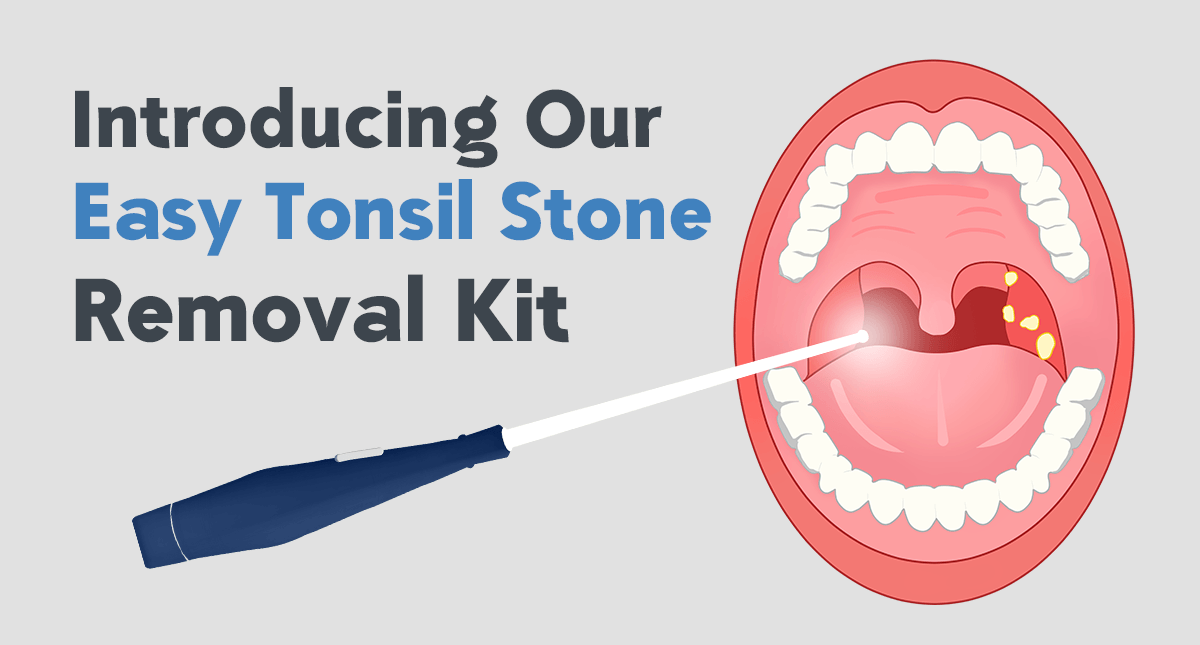
Tonsil stones, also known as tonsilloliths, are small, hard, whitish or yellowish formations that can develop in the crypts (small pockets) of your tonsils. They are formed when debris, bacteria, and mucus become trapped and calcify. While often harmless, they can cause discomfort, bad breath, and a persistent feeling that something is stuck in your throat.

Many people experience tonsil stones without even knowing it. However, if you're here, you're likely one of those who can feel them but can't quite see them. This can be particularly frustrating!
The Challenge of Hidden Tonsil Stones
Tonsil stones that are palpable but not visible present a unique challenge. The fact that you can feel them means they are likely larger or located deeper within the tonsillar crypts. Attempting to remove them requires a delicate approach to avoid damaging the sensitive tonsil tissue.
Symptoms of Tonsil Stones
- Persistent sore throat or discomfort
- Bad breath (halitosis)
- A feeling of something being stuck in the back of your throat
- Difficulty swallowing
- Ear pain (in some cases)
- White or yellow debris on the tonsils
Safe Removal Techniques
Disclaimer: I am an AI and cannot provide medical advice. The following suggestions are for informational purposes only and are not a substitute for professional medical advice. If you experience significant discomfort, pain, or bleeding, consult an ENT (Ear, Nose, and Throat) doctor immediately. Proceed with extreme caution and gentleness.
-
Gentle Irrigation
Use a specialized low-pressure oral irrigator (like a water flosser) on the lowest setting. Direct the stream of water towards the area where you feel the stone. This can help dislodge it without direct contact. Caution: High pressure can damage your tonsils.
-
Soft, Blunt Probing
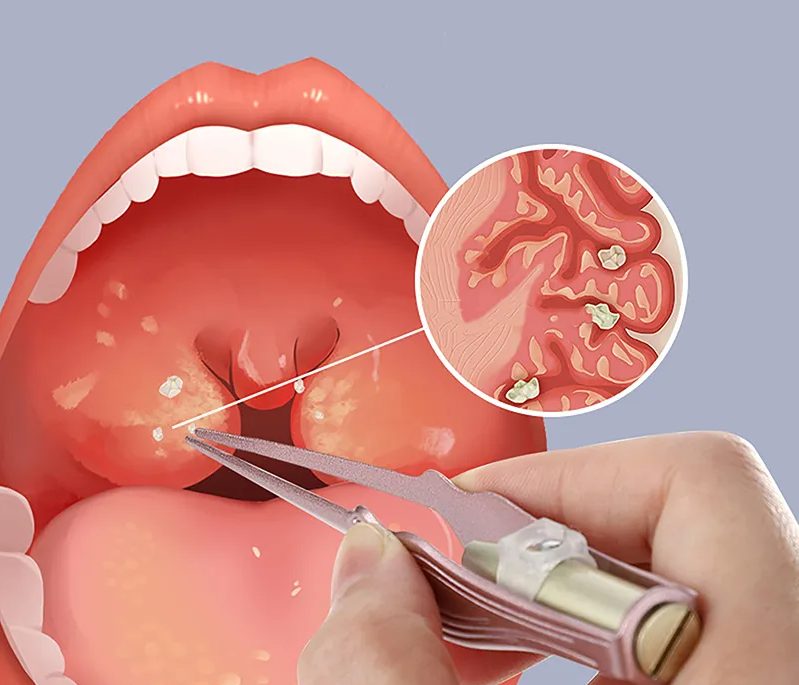
(Use extreme caution and proceed at your own risk) If irrigation doesn't work, you might try using a soft, blunt tool to gently encourage the stone out. Good options include:
- A water flosser tip (without the water)
- The rounded end of a plastic dental tool
- A cotton swab (moistened)
Gently apply pressure around the area where you feel the stone, not directly on it. The goal is to loosen the surrounding tissue and let the stone come out on its own. Stop immediately if you experience any pain or bleeding. -
Gargling
Gargling vigorously with warm salt water can help to loosen tonsil stones and reduce inflammation. This is a good supplementary method to use in conjunction with other techniques.
What to Avoid
- Using sharp objects: Never use anything sharp like a toothpick, knife, or metal dental pick. These can easily puncture your tonsils and cause serious infection.
- Excessive force: Do not try to forcefully dig the stone out. This can damage the tonsil tissue and lead to bleeding and scarring.
- Ignoring pain: If you experience pain, stop immediately. Pain is a sign that you are doing something wrong.
When to See a Doctor
If you experience any of the following, it's important to consult a doctor or ENT specialist:
- Recurring or persistent tonsil stones
- Significant pain or difficulty swallowing
- Bleeding
- Swelling of the tonsils
- Signs of infection (fever, chills, etc.)
A doctor may recommend more advanced treatment options, such as:
- Antibiotics: If there is an infection.
- Tonsil cryptolysis: A procedure that reshapes the tonsil crypts to prevent stone formation.
- Tonsillectomy: Surgical removal of the tonsils (in severe, recurring cases).
Prevention Tips
- Maintain good oral hygiene: Brush your teeth, floss regularly, and use an antiseptic mouthwash.
- Gargle regularly: Gargling with warm salt water can help to prevent the buildup of debris in your tonsils.
- Stay hydrated: Drinking plenty of water can help to flush out debris and prevent tonsil stones from forming.
- Avoid dairy: Some people find that dairy products contribute to tonsil stone formation.